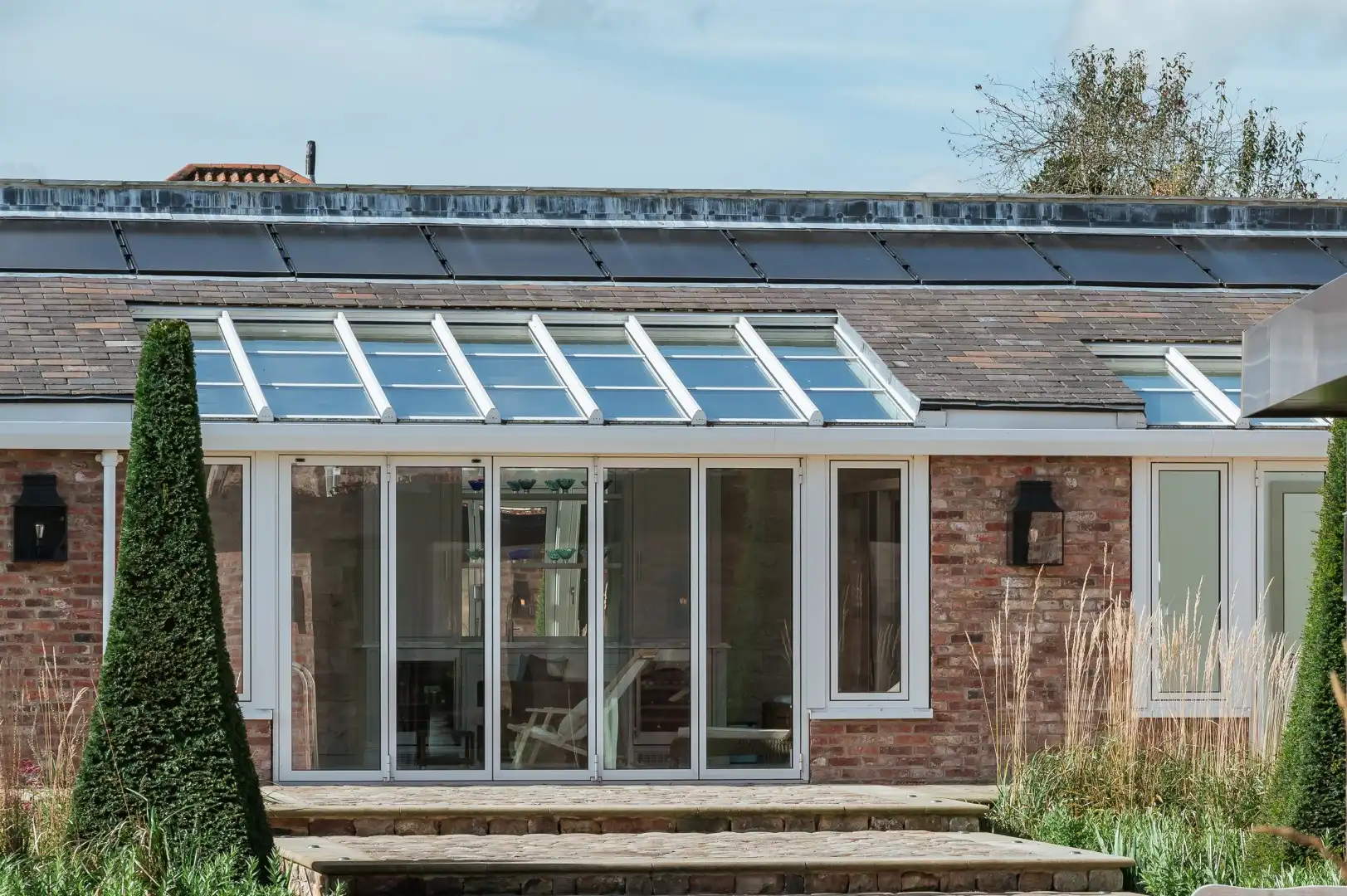

A sedum roof works beautifully for aethetics, seasonal colour chnages and thermal insulation. A roof camouflage for a new structure that delivers multiple benefits.
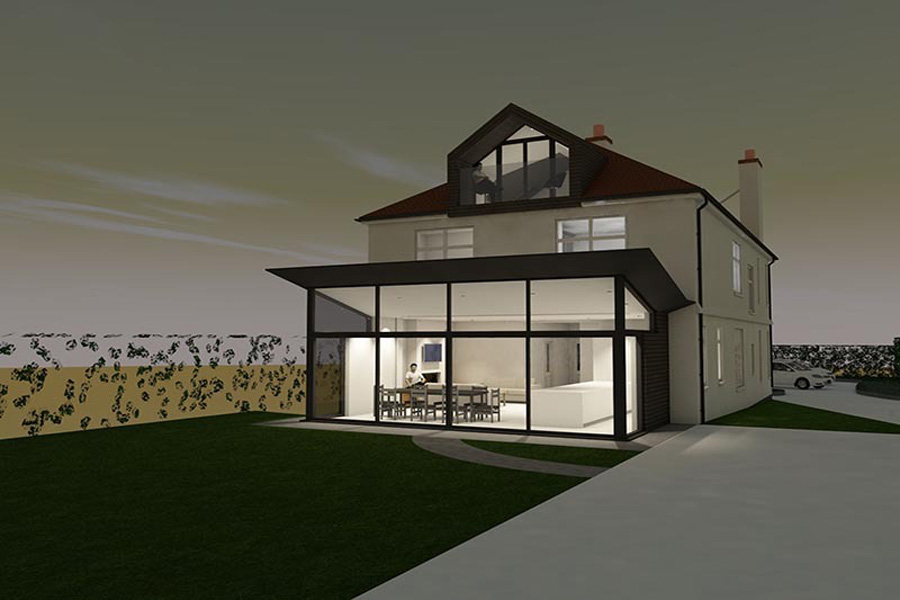
- Softening Hard Lines: Modern extensions often use sharp, flat planes (like the black fascia and glass seen here). The green roof adds texture and softness, preventing the extension from looking like a stark, industrial box against the historic stone.
- Elevated Views: In multi-story homes (like this Victorian villa), the roof of an extension is often visible from the upper bedroom windows. Instead of looking down onto grey asphalt or rubber membrane, the occupants look down onto a “fifth elevation” of living plants, maintaining the garden view.
But what is Sedum?
It is an organic matter; vegetation is not standard lawn grass, and it is low-maintenance. It is a carpet of Sedum—a genus of succulent plants. These plants are drought-tolerant, hardy, and shallow-rooted, requiring no watering or mowing once established. It is variegated and adapts its colour to the season. It can look rusty-red in the autumn, floral in summer and provides rich orange or green hues throughout the year. A beautiful surface for views from windows that overlook it.
Functional & Technical Benefits
Beyond aesthetics, this roof is performing significant work for the building:
Thermal Mass & Insulation: The layer of soil (substrate) and plants acts as an extra insulation blanket, keeping the extension warmer in winter and cooler in summer.
Acoustic Buffer: It significantly reduces noise pollution (e.g., heavy rain drumming on the roof), making the glass-walled interior quieter.
Stormwater Management: The plants absorb a significant amount of rainfall, delaying runoff. This takes pressure off the property’s drainage systems—a key consideration in areas like Ilkley and Harrogate where planning permission often requires sustainable drainage solutions (SuDS).
Conservation & Planning Benefits
In heritage contexts, such as Harrogate or Ilkley, conservation officers favour designs that minimise impact on the original building. A green roof helps the extension “disappear” into the garden, making it easier to gain planning approval for a large modern footprint.